
Wild Himalayan Nettle Tea, Rooted in the Mountains
Himvana Wild Himalayan Nettle Tea is made from Urtica himalayensis, a Himalayan nettle species associated with mountain regions and traditional food practices. Our focus is simple: authentic Himalayan origin, whole-leaf presentation and a naturally caffeine-free herbal infusion.
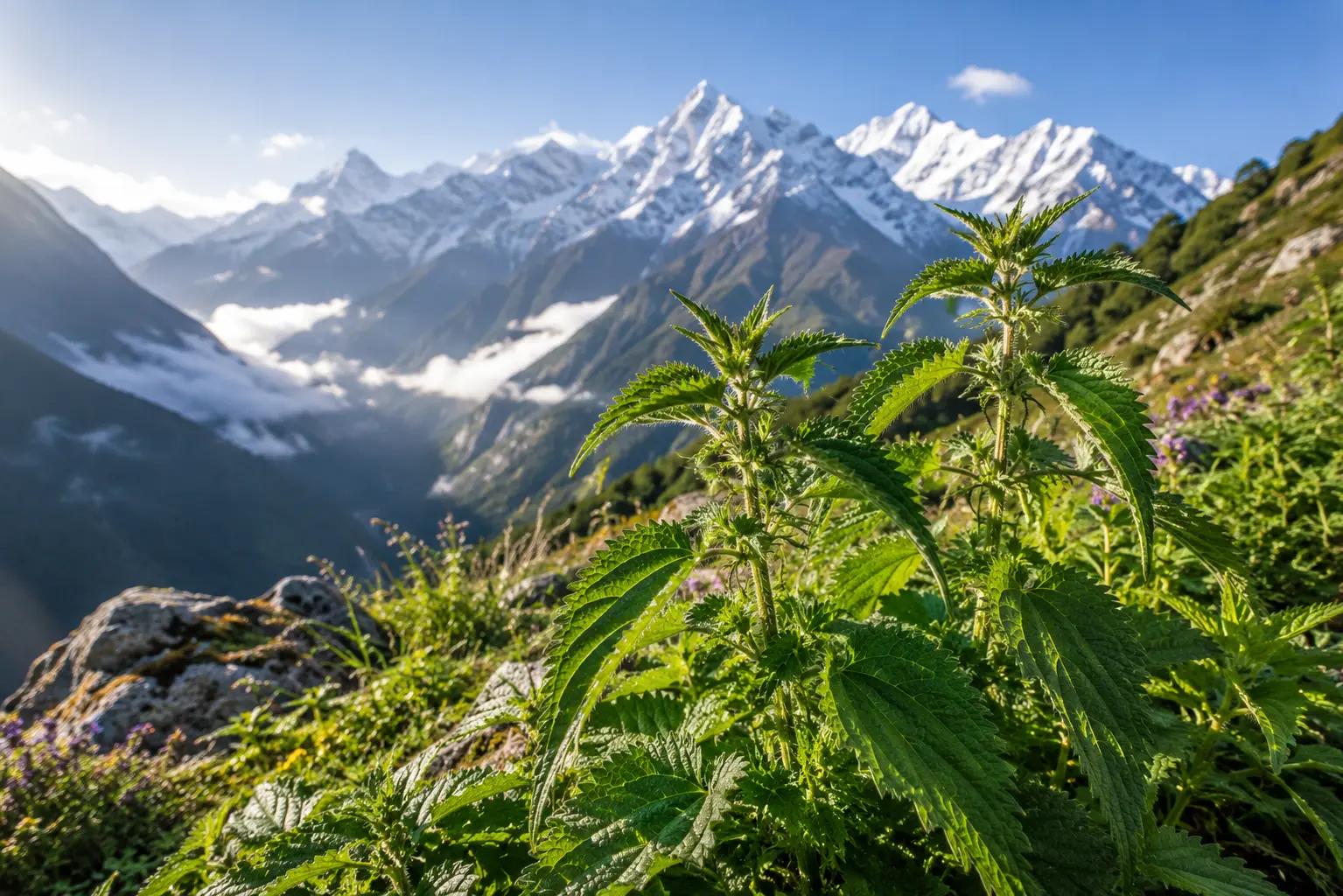
About Himvana and Himalayan Nettle
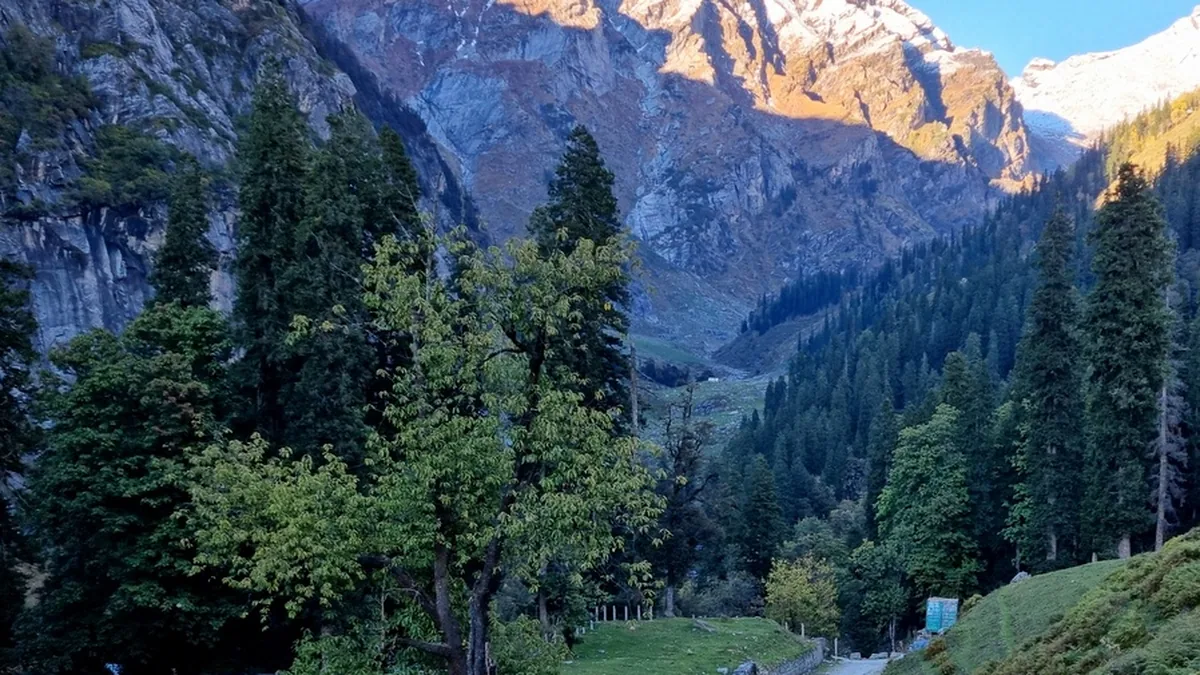
Himvana is based in Hamta Valley, near Sethan, Manali — one of the few places where Urtica himalayensis grows wild at around 8,500 ft, often alongside the common Urtica dioica. That proximity lets us compare the two species directly rather than take anyone’s word for it. Himvana brings Himalayan nettle into an easy daily ritual while keeping the story of the plant clear. Urtica himalayensis is distinct from Urtica dioica, the common stinging nettle. Species identity, growing environment, harvest and processing all matter when comparing botanical products.
What Is Urtica himalayensis?
Urtica himalayensis, commonly described as Himalayan nettle, is associated with Himalayan mountain environments. Nettle leaves have a long history of culinary and traditional household use in Himalayan communities. Himvana presents the plant as a whole-leaf herbal infusion, naturally free from caffeine.
From mountain regions
The Himvana story centres on Himalayan sourcing and the cultural connection between nettle, local food and traditional household knowledge.
Simple plant presentation
Whole-leaf nettle keeps the ingredient easy to identify and understand, with minimal emphasis on complicated blends.
A herbal infusion
Nettle is an herbal infusion rather than tea made from Camellia sinensis, so plain nettle tea is naturally caffeine-free.
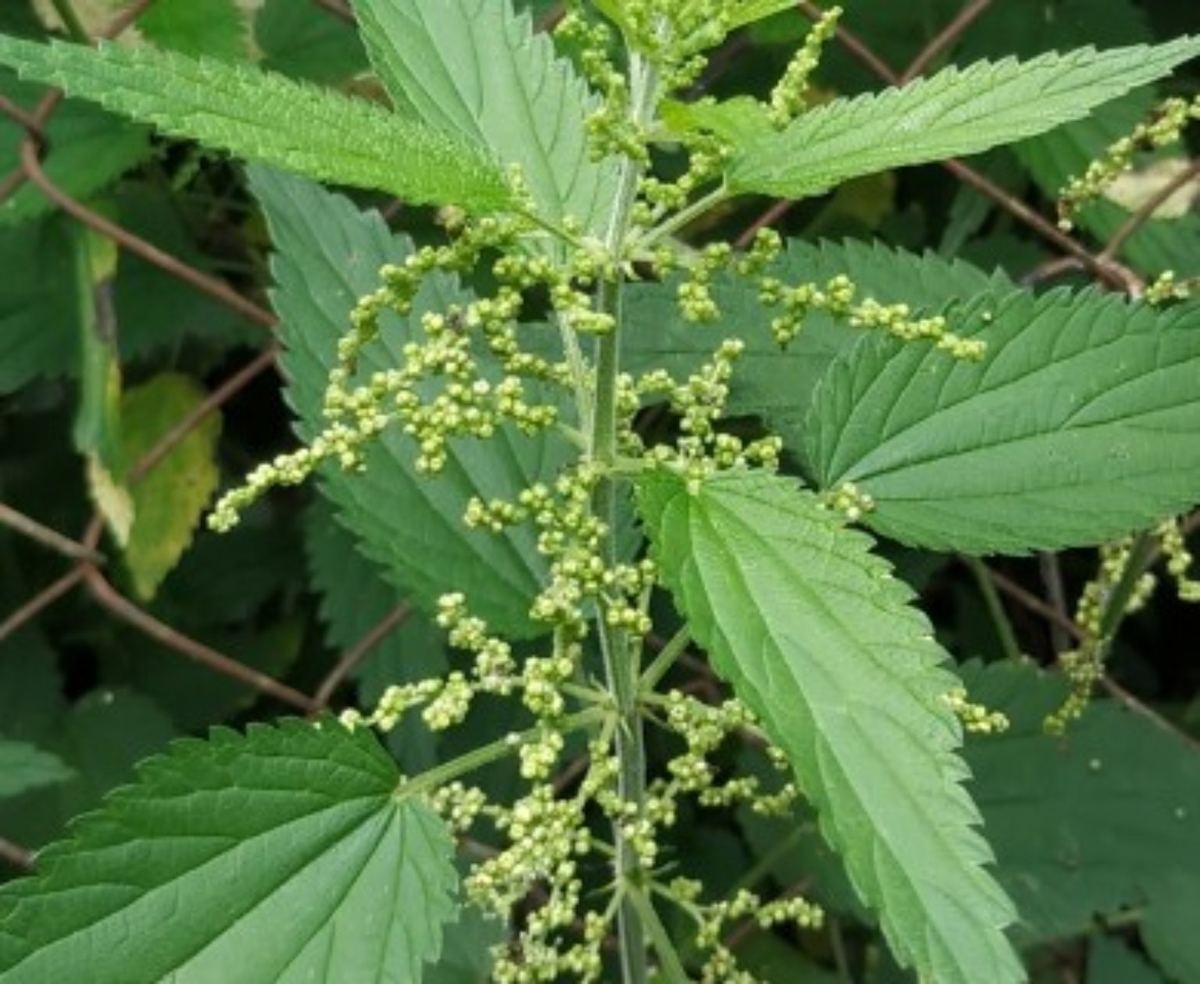
Urtica himalayensis vs Urtica dioica: What Is the Difference?
Urtica himalayensis and Urtica dioica are different botanical species in the same genus. Urtica dioica is widely known as common or stinging nettle and occurs across many temperate regions. Urtica himalayensis is associated with the Himalayas. Differences in species, geography, growing conditions, harvest and processing provide important context when comparing nettle products.
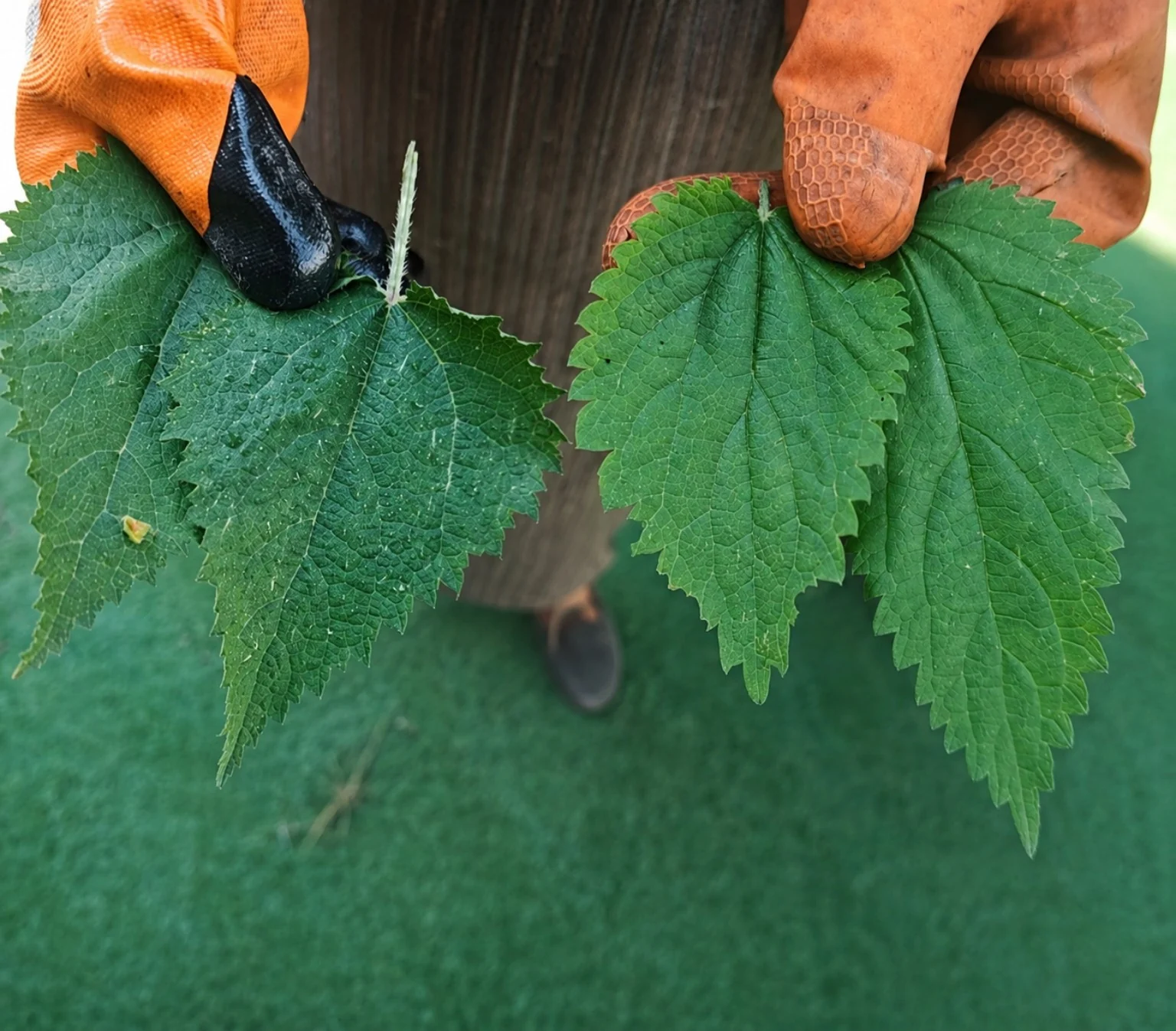
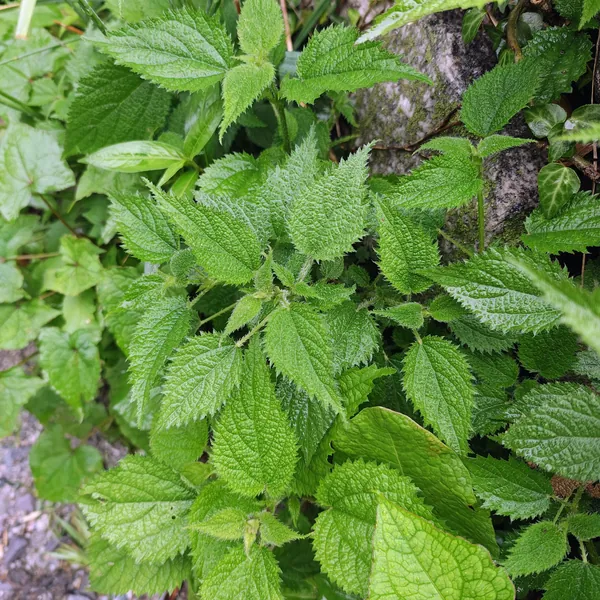
Urtica himalayensis — Himalayan nettle
- Associated with Himalayan mountain regions.
- A distinct species from Urtica dioica.
- Connected with regional food and household traditions.
- Himvana highlights Himalayan origin and whole-leaf presentation.
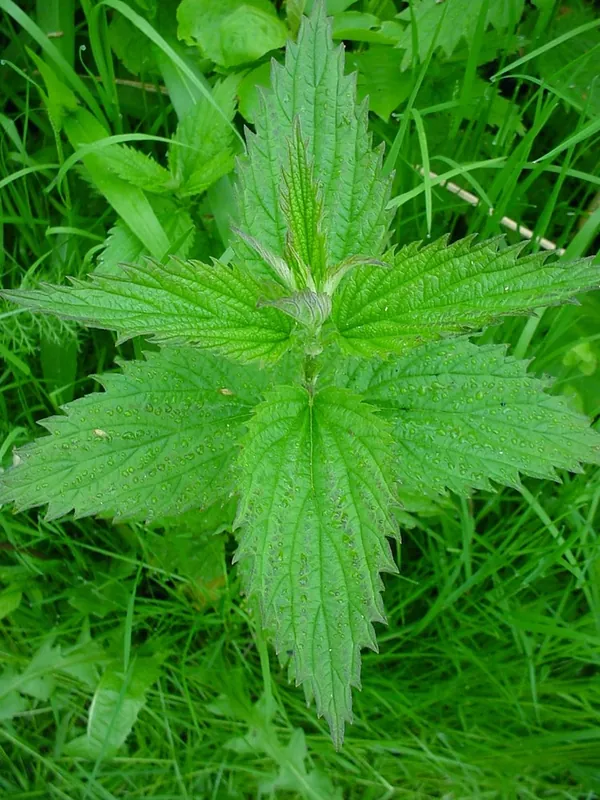
Urtica dioica — common nettle
- Widely distributed in temperate regions.
- Commonly called common nettle or stinging nettle.
- Has a long history of culinary and traditional herbal use.
- Available from many geographic and commercial sources.
Why the distinction matters
A nettle product should be identified by its botanical species and described accurately. Growing location, harvest stage, processing and preparation are also important context. One concrete difference we’ve observed directly during drying: at 65°C, Urtica dioica browns within about 2 hours, while Urtica himalayensis holds its green colour for 4 hours or more. Himvana focuses specifically on Urtica himalayensis and its Himalayan story.
Nettle Nutrition and Plant Compounds
Nettle leaves naturally contain minerals and plant compounds that have attracted nutritional and botanical interest. These can include iron, calcium, magnesium, polyphenols and flavonoids. Exact composition can vary with species, growing conditions, harvest and processing.
Minerals
Nettle leaves can contain minerals including iron, calcium and magnesium as part of the plant’s natural nutritional profile.
Polyphenols & Flavonoids
Nettle contains naturally occurring plant compounds including polyphenols and flavonoids that are studied for antioxidant activity.
Traditional Food & Herbal Use
Nettle has a long history of culinary and traditional household use, including cooked leafy preparations and herbal infusions.
Why People Choose Himalayan Nettle Tea
Rooted in Himalayan Tradition
Nettle has been part of Himachali households for generations — cooked into saag and chutney long before it appeared in any wellness trend.
Digestion & Daily Routine
A warm herbal infusion can be enjoyed as part of a balanced daily routine and traditional food culture.
Skin & Hair Nutrition
Nettle is valued for its naturally occurring nutrients and plant compounds and appears in traditional beauty practices.
Naturally Iron-Rich
Nettle is naturally rich in iron and other minerals, part of why it has stayed a household staple across generations.
Naturally Caffeine-Free
Plain nettle tea is naturally caffeine-free, making it an option for people who want a herbal drink without caffeine.
Simple Herbal Ritual
Whole-leaf nettle can be prepared as a straightforward herbal infusion with hot water.
From the Himalayas to Your Cup
1. Source
Begin with clear botanical identity and Himalayan origin.
2. Prepare
Use whole-leaf nettle to make a simple herbal infusion.
3. Enjoy
Make a naturally caffeine-free herbal drink part of your routine.
4. Understand
Choose products with transparent information about species, sourcing and processing.
Frequently Asked Questions About Himalayan Nettle Tea
What is Urtica himalayensis?
Urtica himalayensis is a Himalayan nettle species associated with Himalayan mountain regions and used by Himvana for Wild Himalayan Nettle Tea.
Is Himalayan nettle tea caffeine-free?
Yes. Plain nettle is an herbal infusion and does not naturally contain the caffeine found in Camellia sinensis tea.
What is Urtica dioica?
Urtica dioica is commonly known as common nettle or stinging nettle. It is a different species from Urtica himalayensis and is widely distributed in temperate regions.
What nutrients are naturally found in nettle?
Nettle leaves can contain minerals such as iron, calcium and magnesium, along with naturally occurring plant compounds including polyphenols and flavonoids.
How is nettle traditionally used?
Nettle has a long history of culinary and traditional household use, including cooked leafy preparations and herbal infusions.
Important: Himvana products are not intended to diagnose, treat, cure or prevent disease. If you are pregnant, taking medication or have a medical condition, consult a qualified healthcare professional before using herbal products.
The Himvana Story
Himvana started in Hamta Valley, in the shadow of the Hampta Pass, where Urtica himalayensis has always grown wild on the slopes above Sethan. We work directly with local harvesters who know exactly which plants to pick and when — nettle here isn’t farmed, it’s found, the same way Himachali households have gathered it for generations to cook into saag and chutney. That’s the story we’re trying to carry into every pouch: not an abstract wellness narrative, but a specific place, a specific plant, and the people who know it best.
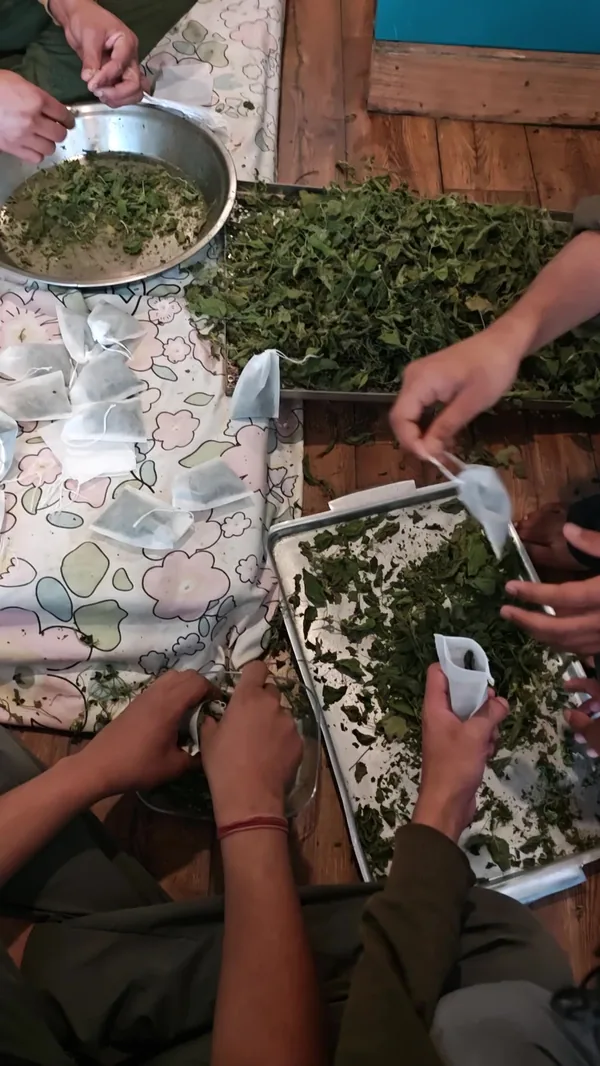
Filled by hand
Every tea bag is filled by hand, not machine — small batches, done properly.
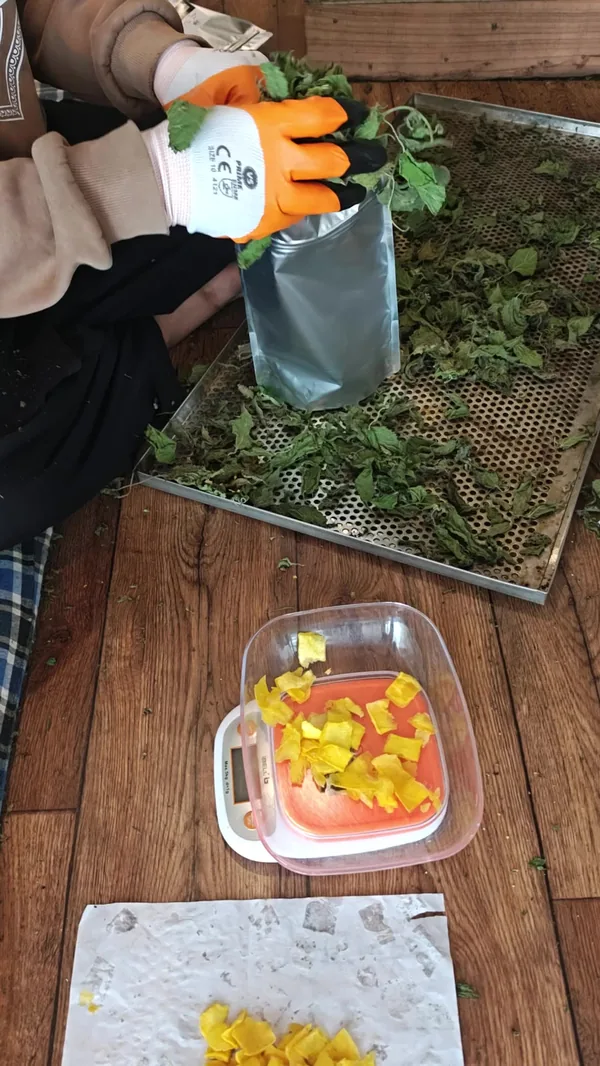
Packed straight from the tray
Dried leaves go straight from the drying tray into the pouch you receive.
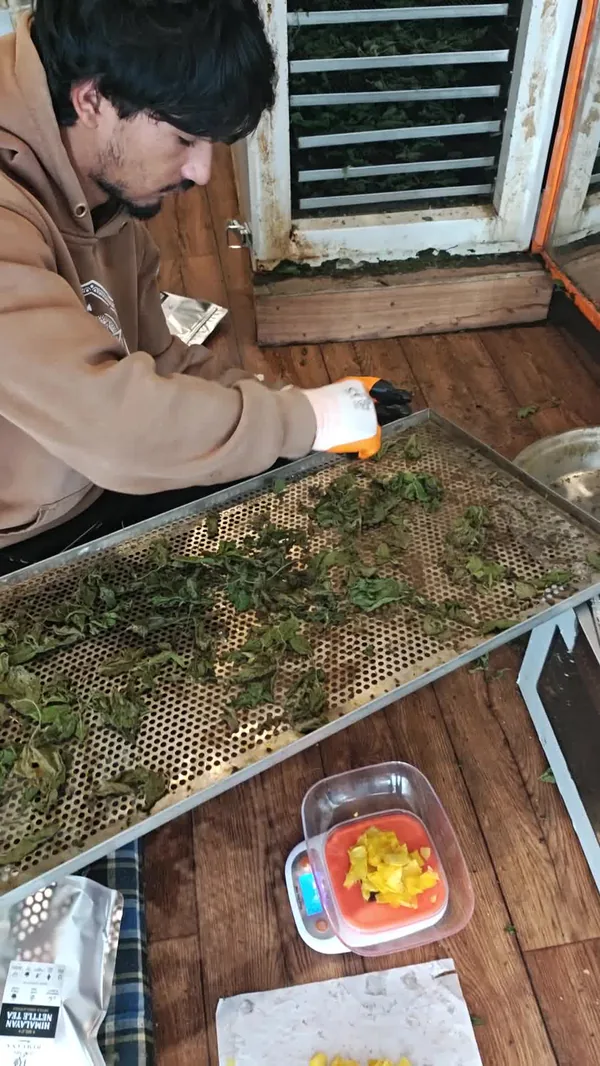
Sorted by hand
Leaves are checked and sorted by hand before they’re ever packed.
That’s the whole process, start to finish — from Hamta Valley’s slopes to your cup, with nothing hidden in between.