Urtica Himalayensis: The Complete Guide to the Himalayan Wild Stinging Nettle
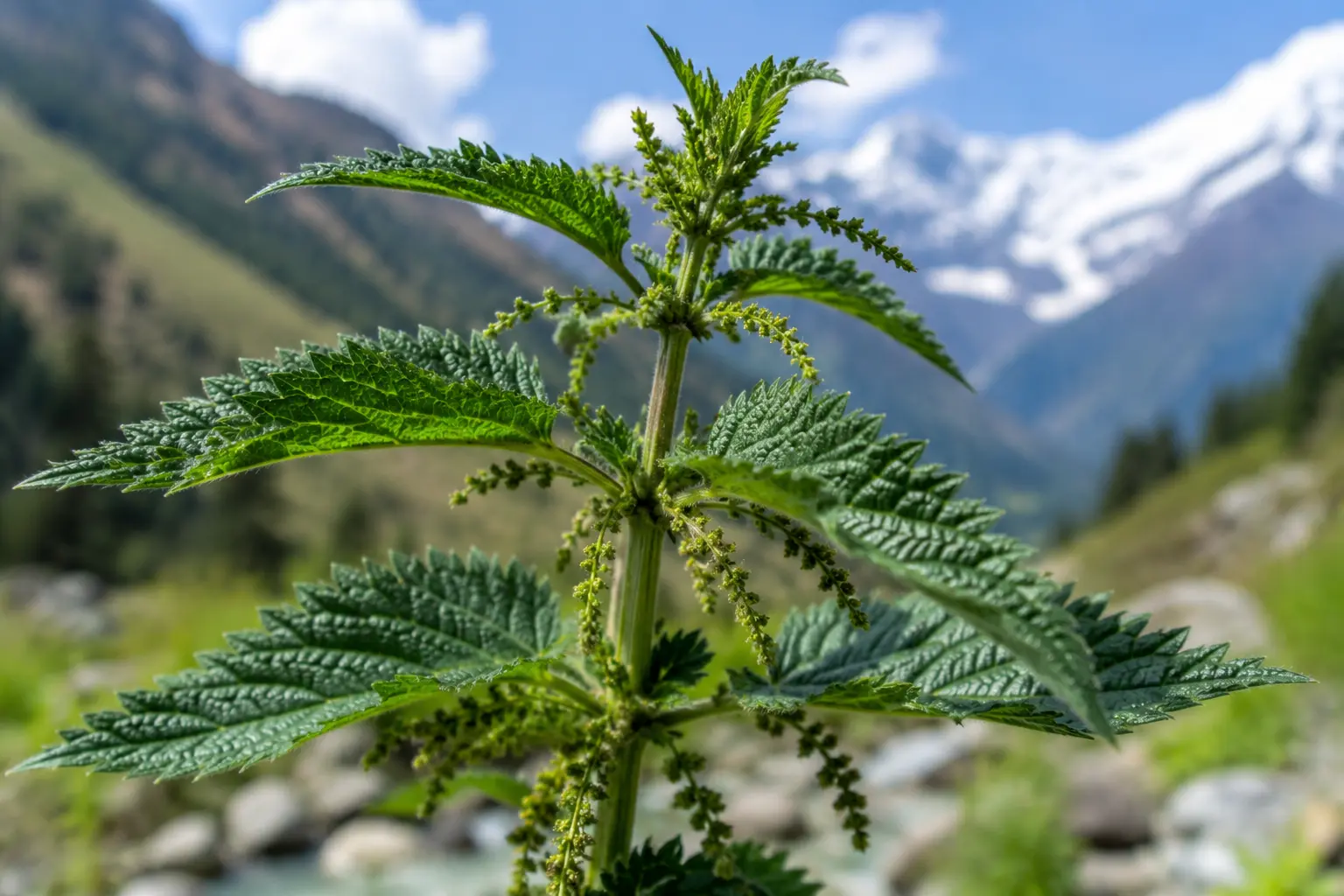
High in the Himalayan mountains, above 8,000 feet, grows a wild plant that local communities have used for generations. In Himachal Pradesh it’s called Bichhoo Booti; in other regions, Kandali. Botanically, it’s known as Urtica himalayensis — the Himalayan stinging nettle.
This guide covers what the plant actually is, where it grows, how it has traditionally been used, and what nutrition and research exist around it — separating what’s well-established from what’s still regional tradition.
What Is Urtica Himalayensis?
Urtica himalayensis belongs to the genus Urtica, the same botanical family as the common stinging nettle (Urtica dioica) found across Europe and North America. The genus contains 30 to 45 recognized species worldwide, and several — including U. himalayensis — are specifically associated with high-altitude Asian mountain ranges.
Why Locals Prefer Urtica himalayensis?
Based in Hamta village, Manali — one of the few places where Urtica himalayensis and Urtica dioica grow wild side by side, within meters of each other which gives Himvana, a direct comparison as compared to other Nettle tea retailers.
And in Hamta, the difference isn’t subtle. Locals here don’t really consider Urtica dioica a proper stinging nettle at all — Urtica himalayensis is the one people actually use. Its sting is far more intense (the leaves themselves are densely covered in stinging hairs, not just the stems), the leaf is noticeably juicier, and it carries a deeper, richer flavor in the cup. It even holds up differently once harvested: in a dehydrator, Urtica dioica leaves turn brown within about 2 hours, while Urtica himalayensis can dry for 4 hours at 65°C and still stay green — a real sign of how much more robust the leaf is. It’s exactly why, in this valley, Urtica himalayensis has always been the nettle of choice.
Where It Grows
Himalayan nettle grows wild across the western Himalayan belt — Himachal Pradesh, Uttarakhand, and Kashmir in India, extending into Nepal and Bhutan. It’s typically found between 1,200 and 3,000 meters (roughly 4,000 to 10,000 feet), thriving in forests, shaded stream banks, and moist, disturbed ground near mountain trails and village fields.
The altitude matters. Cooler temperatures, mineral-rich mountain soil, and a shorter, more intense growing season are the same conditions that shape flavor and character in other Himalayan crops — it’s a plant genuinely formed by where it grows, not just labeled for marketing.
Traditional Use in the Himalayas
Long before it reached a tea pouch, Himalayan nettle was a practical, seasonal food source. Local communities across Himachal Pradesh, Uttarakhand, and the wider western Himalayas have traditionally harvested young nettle leaves in spring, cooking them into soups and saag-style dishes once the sting is neutralized by heat — a practice that continues in mountain villages today, particularly in areas with limited access to other fresh greens.
In Hamta and the surrounding valley, fresh Urtica himalayensis leaves are also traditionally crushed into a paste and applied topically — passed down through generations as a household remedy for everyday swelling, sore muscles, and minor aches. Locals also eat the leaves as saag and chutney, a regular part of the mountain diet here, not just an occasional herbal tea.
Nettle (broadly, across Urtica species) also appears in the Indian Ayurvedic Pharmacopoeia, historically referenced in connection with nosebleeds, skin conditions, and other traditional applications. These are traditional, generations-old local practices, not medical claims — see the note at the end of this article, especially for anything beyond everyday minor aches.
Nutritional Profile
Nettle leaves are naturally packed with nutrients, which is one of the main reasons they’ve been used for generations. Studies on different types of nettle plants have found that they contain:
- Vitamins A, C, K, and B-complex
- Important Minerals including iron, calcium, magnesium, and zinc
- Plant based protein and dietary fiber
- Natural plant compounds (antioxidants) such as chlorogenic acid, rutin, and quercetin
It’s also important to be transparent. Most of the available research on the nutritional value and active plant compounds has been carried out on different nettle species, especially common nettle (Urtica dioica), rather than Himalayan nettle (Urtica himalayensis). While these plants are closely related and share many similar properties, more research specifically on Urtica himalayensis is still needed.
What the Research Says About Nettle
Researchers have spent many years studying common nettle (Urtica dioica) to better understand its health benefits. Many of these studies suggest that nettle is rich in natural antioxidants, thanks to plant compounds called polyphenols.
In laboratory studies, nettle extracts have been tested to see how well they help protect cells from oxidative stress (damage caused by free radicals). Researchers have also measured their antioxidant strength using standard lab tests and looked at how nettle extracts may help reduce inflammation in cell-based studies.
While these findings are encouraging, most of this research has been done in laboratories rather than in large human clinical trials.
It’s important to understand what these studies actually tell us. Most of the research has been done in laboratories using cells, or in small-scale studies, rather than large clinical trials involving people. Also, the studies mainly focus on common nettle (*Urtica dioica*), not Himalayan nettle (*Urtica himalayensis*).
The results suggest that nettle contains interesting natural compounds with potential health benefits. However, they do **not** prove that drinking nettle tea can prevent, treat, or cure any disease. More human studies, especially on *Urtica himalayensis*, are needed to better understand its health effects.
Himalayan Nettle vs. Common Nettle
Both plants share the same core nutrient categories and traditional herbal-tea use. The practical differences come down to origin and harvest: Himalayan nettle grows wild at high altitude and is typically hand-harvested by people with generational familiarity with the plant, while common nettle (Urtica dioica) is more widely cultivated at lower elevations worldwide. For a full side-by-side comparison, see our Urtica himalayensis vs. Urtica dioica breakdown.
How to Brew It
Himalayan nettle tea is prepared the same way as most herbal infusions — steeped in hot water for several minutes until the color and aroma develop. For step-by-step brewing times and tips, see our full Himalayan nettle tea brewing guide.
Frequently Asked Questions
Is Urtica himalayensis the same plant as regular stinging nettle?
They’re closely related, both in the genus Urtica, but grow in different environments. Urtica himalayensis is native to high-altitude Himalayan regions, while common stinging nettle (Urtica dioica) is far more widely distributed at lower elevations globally.
What is Urtica himalayensis called locally?
In Himachal Pradesh it’s commonly known as Bichhoo Booti; in other Himalayan regions it’s also called Kandali.
Is Himalayan nettle tea caffeine-free?
Yes. Like other nettle teas, it’s naturally caffeine-free, making it suitable as an evening herbal infusion.
Where does Himvana source its Urtica himalayensis?
Himvana sources wild-harvested Himalayan nettle from high-altitude regions of Himachal Pradesh, at around 8,500 ft, prepared as our Wild Himalayan Nettle Leaf Tea.