Bichu Buti Tea: A Traditional Himalayan Herbal Drink Worth Discovering
If you have ever visited the Himalayan region or spoken to someone from the mountains, you may have heard the name Bichu Buti. It is a wild plant that has been used in traditional mountain life for generations. While many people know it for its stinging leaves, fewer know that nettle can also be prepared as a simple herbal drink.
Bichu Buti tea is gradually attracting attention among people who enjoy natural beverages and want something different from their usual cup of tea or coffee. Its earthy flavour, simple preparation and connection to Himalayan traditions make it an interesting addition to a daily routine.
But what exactly is Bichu Buti tea? How does it taste, and what should you know before trying it? Let’s take a closer look.
What Is Bichu Buti Tea?
Bichu Buti, also spelled Bichhoo Booti, is a regional name commonly used for stinging nettle. The plant grows in different parts of the world, including the Himalayan region, where nettles have long been familiar to local communities.
The fresh plant is known for its tiny stinging hairs, which can irritate the skin when touched. Once the leaves are properly processed and prepared, however, nettle can be used in food and herbal infusions.
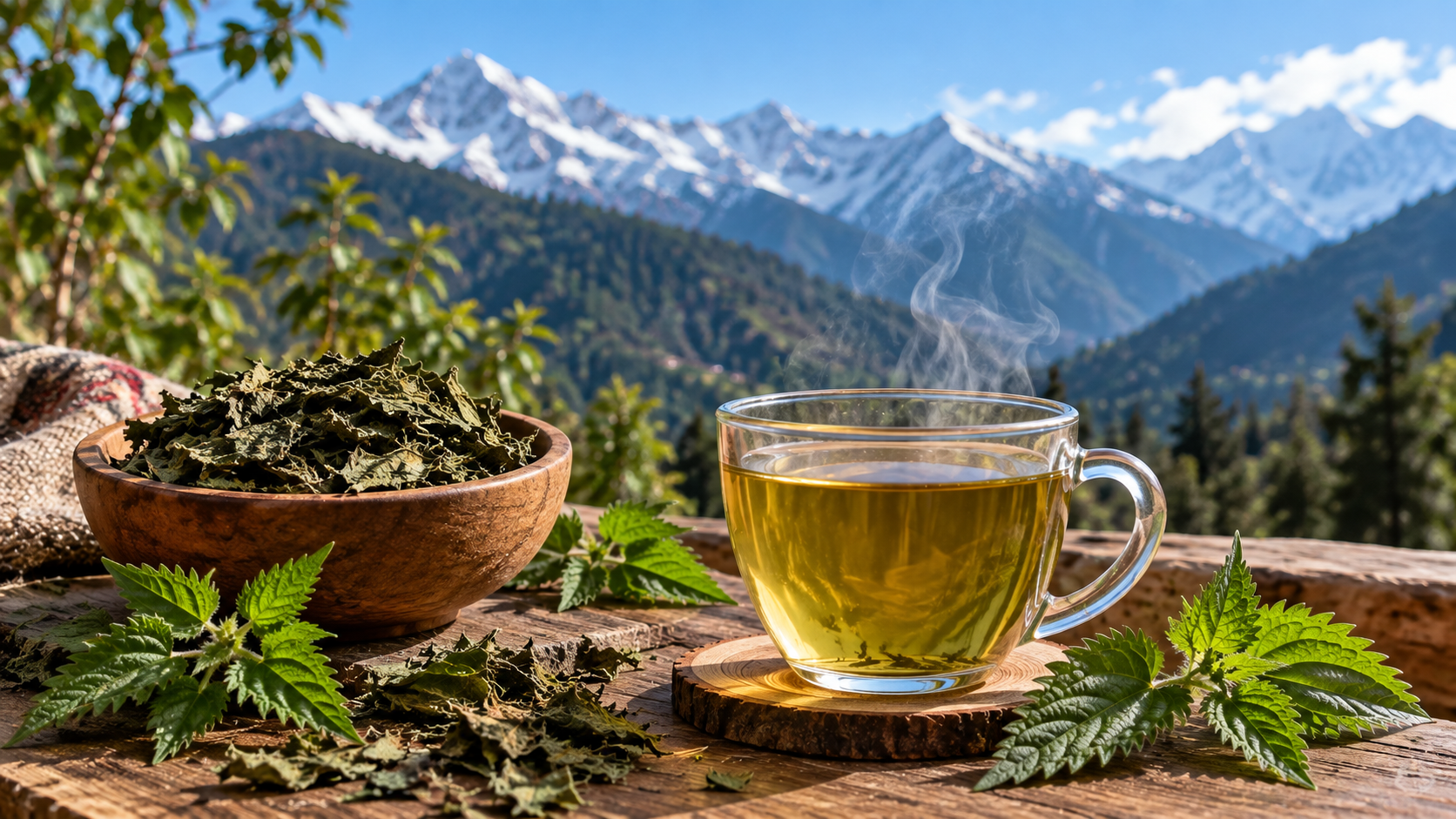
Bichu Buti tea is made by steeping dried nettle leaves in hot water. The result is a simple herbal drink with a mild, earthy taste.
At Himvana, our focus is on Himalayan nettle, including Urtica himalayensis. If you are curious to try it, you can explore our Wild Himalayan Nettle Leaf Tea.
Why Do People Drink Bichu Buti Tea?
For many people, trying Bichu Buti tea is about discovering a traditional Himalayan ingredient. Others enjoy it because they want more variety in their everyday drinks.
Here are a few reasons why people are interested in nettle tea.
1. A naturally caffeine-free option
If you are trying to reduce your caffeine intake, plain nettle tea may be worth considering. Unlike regular black tea and coffee, an infusion made solely from nettle leaves is naturally caffeine-free.
That makes it an option for people who want a warm drink in the afternoon or evening without the caffeine found in conventional tea. Just check the ingredients if you buy a blend, as other ingredients may contain caffeine.
2. A simple way to explore Himalayan herbs
The Himalayas are home to a wide variety of plants that have been part of local food traditions for generations. Bichu Buti is one of them.
Trying nettle tea offers a small introduction to this tradition. You do not need complicated equipment or an elaborate recipe; dried leaves and hot water are enough to get started.
3. It contains naturally occurring plant compounds
Nettle leaves contain various naturally occurring plant compounds, including polyphenols. These compounds are one reason nettle has attracted scientific interest.
However, it is important to keep expectations realistic. Research on nettle often focuses on other species, particularly Urtica dioica. There is still limited evidence to establish specific health benefits of drinking Urtica himalayensis tea in humans.
4. An alternative to your usual cup of tea
Sometimes, the appeal of a new drink is simply that it tastes different.
Bichu Buti tea has a mild, leafy flavour that some people compare to green vegetables or other herbal infusions. You can drink it on its own or experiment with a little lemon, depending on your taste.
It is not meant to replace medical treatment or promise dramatic health results. Think of it as another herbal beverage you can enjoy as part of a balanced lifestyle.
What Does Bichu Buti Tea Taste Like?
If you are expecting the strong, familiar taste of Indian milk tea, Bichu Buti tea may surprise you.
Its flavour is generally mild and earthy, with a leafy character. The taste can vary depending on the quality of the leaves, how they have been processed and how long you steep them.
For a first cup, try drinking it plain so you can get a sense of its natural flavour. If you prefer something brighter, add a small squeeze of lemon. You can also experiment with ginger, although adding other ingredients will change the flavour of the infusion.
One useful tip: do not steep the leaves for too long on your first attempt. Start with the recommended brewing time and adjust it gradually until you find a taste you enjoy.
How to Make Bichu Buti Tea at Home
One of the nice things about nettle tea is that you do not need a special tea maker or complicated preparation method.
What you need
- 1 teaspoon of dried Bichu Buti or nettle leaves, or the quantity recommended on your product label
- 1 cup of hot water
- A tea strainer, if needed
- Lemon or ginger, if you would like to experiment with the flavour
Method
- Bring fresh water to a boil.
- Place the dried nettle leaves in a cup or teapot.
- Pour the hot water over the leaves.
- Cover and let them steep for around 5–7 minutes as a starting point.
- Strain the leaves and allow the tea to cool slightly before drinking.
- Taste it plain first, then add lemon or another flavouring if you prefer.
If the tea tastes too strong, reduce the steeping time next time. If you prefer a fuller flavour, you can let it steep a little longer, following the product instructions.
Always use properly processed tea intended for consumption rather than picking and handling wild nettle leaves yourself.
When Is the Best Time to Drink Bichu Buti Tea?
There is no universally established best time to drink Bichu Buti tea. It mostly comes down to your preferences and how it fits into your routine.
Some people enjoy a warm herbal drink in the morning, while others prefer one during a quiet afternoon break. Because a plain nettle infusion is naturally caffeine-free, it can also be an alternative to caffeinated tea later in the day.
Start with a small serving to see how you tolerate it. If you have a health condition or take regular medication, check with a healthcare professional before making nettle tea a daily habit.
Bichu Buti Tea vs Regular Tea
If you are deciding whether to try nettle tea, the main differences are its ingredients, taste and caffeine content.
| Feature | Bichu Buti tea | Regular black tea |
|---|---|---|
| Main ingredient | Nettle leaves | Leaves of the tea plant |
| Caffeine | Naturally caffeine-free when made with nettle alone | Naturally contains caffeine |
| Taste | Mild, earthy and leafy | Usually stronger and more astringent |
| Preparation | Steep in hot water | Steep in hot water |
| Common additions | Lemon or ginger | Milk, sugar, lemon or spices |
Neither drink is automatically better for everyone. The right choice depends on what you enjoy, your caffeine preferences and any individual health considerations.
How to Choose Good-Quality Bichu Buti Tea
If you are buying Bichu Buti tea for the first time, it is worth paying attention to a few basic details.
Check the botanical name. Regional names can refer to different plants. A product that identifies its botanical ingredient makes it easier to understand what you are buying.
Read the ingredient list. If you want a plain nettle infusion, look for a product that clearly lists nettle leaves rather than a blend with additional ingredients.
Look for clear sourcing information. Information about where the leaves come from and how they are processed can help you make a more informed choice.
Follow the storage instructions. Keep dried herbal tea in a sealed container in a cool, dry place, away from moisture and strong odours.
At Himvana, we offer Wild Himalayan Nettle Leaf Tea made with Urtica himalayensis. If you would like to learn more about the product, you can view the tea here.
Is Bichu Buti Tea Safe for Everyone?
Natural does not always mean suitable for everyone. Nettle may cause side effects or interact with certain medicines, and individual responses can vary.
If you are pregnant or breastfeeding, have an ongoing medical condition, or take prescription medicines, speak with a qualified healthcare professional before drinking nettle tea regularly.
Do not use Bichu Buti tea as a substitute for prescribed treatment. Also, avoid consuming unidentified wild plants, as different species can be confused with one another.
Frequently Asked Questions
Is Bichu Buti tea the same as nettle tea?
Bichu Buti is a regional name commonly used for stinging nettle, so Bichu Buti tea is generally a type of nettle infusion. However, the exact plant species can vary, which is why checking the botanical name on the product is useful.
Is Bichu Buti tea caffeine-free?
A tea made only from nettle leaves and water is naturally caffeine-free. If it is mixed with black tea, green tea or other caffeinated ingredients, the finished drink may contain caffeine.
Can I drink Bichu Buti tea every day?
Whether daily consumption is appropriate depends on your health, medications and the product you use. There is limited clinical evidence establishing a universally safe or beneficial daily amount for Urtica himalayensis. Ask a healthcare professional if you plan to drink it regularly.
How long should I steep Bichu Buti tea?
Around 5–7 minutes is a reasonable starting point for dried nettle leaves. Adjust the time according to your taste and the instructions supplied with your tea.
Does Bichu Buti tea have proven medicinal benefits?
Nettle has been studied for various potential biological