Himalayan Nettle Leaf Tea: Benefits, Uses & How to Brew It
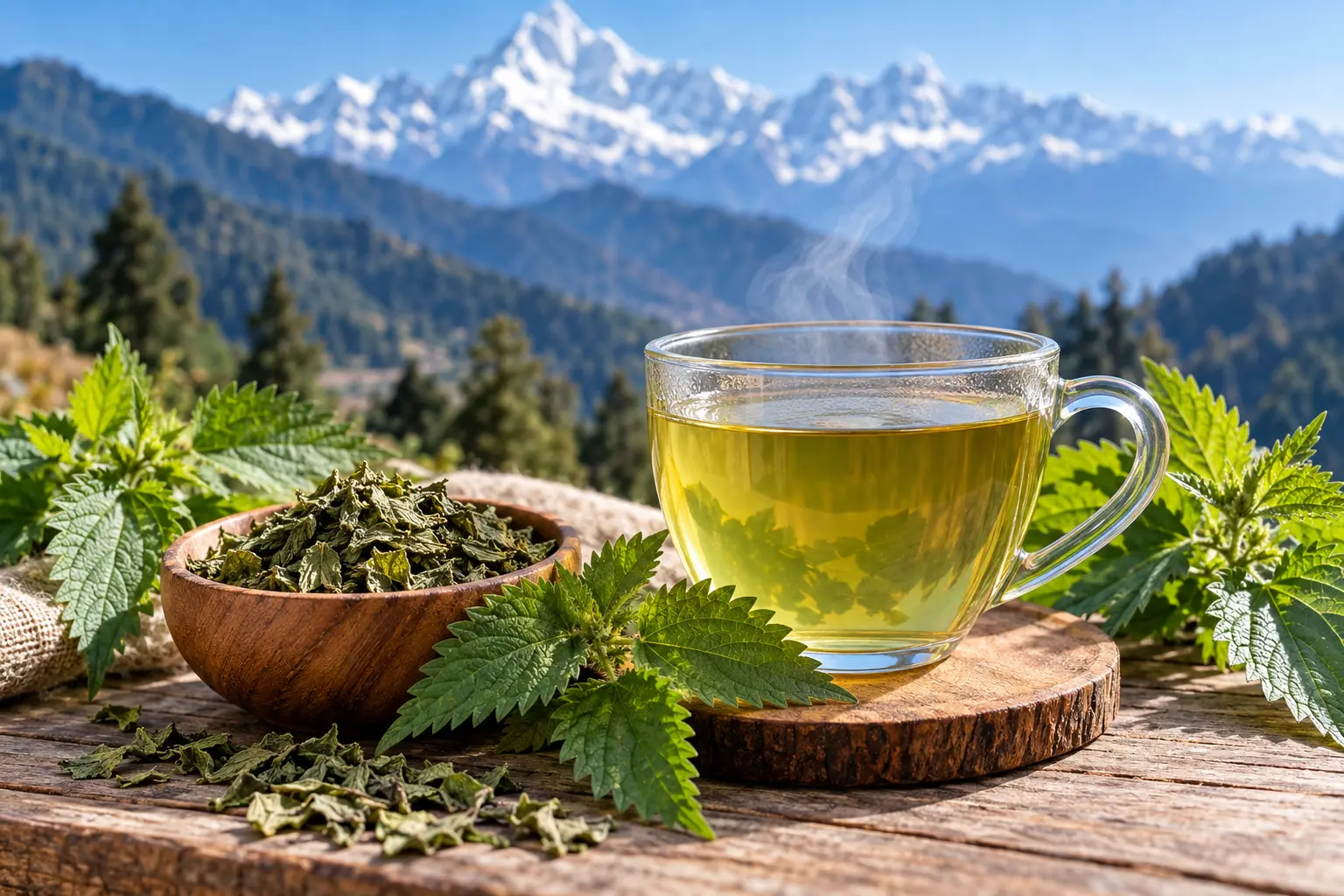
Himalayan nettle leaf tea is a traditional herbal infusion made from the leaves of nettle plants found in the Himalayan region. Known for its earthy character and naturally occurring plant compounds, nettle tea has become increasingly popular among people looking for simple, caffeine-free herbal beverages.
Unlike conventional teas made from Camellia sinensis, Himalayan nettle leaf tea is an herbal infusion. It can be enjoyed on its own or combined with other botanicals for a distinctive Himalayan-inspired wellness drink.
In this guide, we explore what Himalayan nettle leaf tea is, its potential benefits, how to prepare it, and what makes Himalayan-grown nettle different.
What Is Himalayan Nettle Leaf Tea?
Himalayan nettle leaf tea is prepared by steeping dried nettle leaves in hot water. The nettle plant belongs to the genus Urtica, and Himalayan varieties are found in the mountainous regions of the Himalayas.
One species associated with the Himalayan region is Urtica himalayensis. The plant has traditionally been valued in Himalayan communities and is increasingly being explored as an ingredient for herbal infusions.
Once properly processed and dried, nettle leaves can be brewed into a light herbal tea with an earthy, refreshing character.
Because nettle tea is naturally caffeine-free, it can be a suitable alternative for people who want to reduce their consumption of conventional caffeinated tea or coffee.
Potential Benefits of Himalayan Nettle Leaf Tea
Nettle leaves naturally contain a variety of plant compounds and nutrients. As part of a balanced diet, nettle leaf tea can be an enjoyable addition to a daily beverage routine.
1. Naturally Caffeine-Free
One of the simplest advantages of nettle leaf tea is that it is naturally caffeine-free.
This makes it an appealing choice for people who want a warm beverage without the caffeine typically found in black tea, green tea, or coffee.
2. Contains Naturally Occurring Plant Compounds
Nettle leaves contain naturally occurring polyphenols, flavonoids, minerals, and other plant compounds.
These compounds are one reason nettle has attracted interest as a traditional herbal ingredient.
However, the nutritional composition of nettle tea can vary depending on the plant, growing conditions, processing method, and brewing technique.
3. A Simple Herbal Beverage
Himalayan nettle tea can be incorporated into a simple daily beverage routine without complicated preparation.
A cup of freshly brewed nettle tea can be enjoyed in the morning, during a work break, or as a relaxing caffeine-free drink later in the day.
4. Traditionally Valued in Herbal Practices
Nettle has a long history of traditional use in different cultures. Himalayan communities have used locally available plants as part of traditional food and wellness practices.
Modern nettle tea is best viewed as a herbal beverage rather than a replacement for medical treatment.
5. Supports a Varied, Plant-Based Lifestyle
For people interested in herbal beverages and plant-based ingredients, nettle tea offers another way to introduce botanicals into their daily routine.
It can also be combined with ingredients such as lemon, ginger, mint, or other herbs to create different flavors.
What Makes Himalayan Nettle Different?
Not all nettle plants grow in the same environment.
Himalayan nettle is associated with the high-altitude ecosystems of the Himalayan region. Soil conditions, climate, altitude, rainfall, and other environmental factors can influence the characteristics of plants grown in a particular region.
Himalayan-grown nettle is therefore valued not only as a traditional botanical but also as part of the region’s unique plant heritage.
For consumers, choosing a nettle tea that clearly identifies the plant source and ingredients can provide greater transparency about what they are drinking.
Himalayan Nettle Tea vs Regular Nettle Tea
The term “nettle tea” can refer to herbal infusions made from different Urtica species.
Himalayan nettle tea specifically highlights nettle sourced from the Himalayan region, while products simply labeled “nettle tea” may use nettle from different geographical locations.
When purchasing Himalayan nettle tea, look for information about:
- The botanical name of the nettle
- The geographical source
- Whether the leaves are whole, crushed, or powdered
- Processing and drying methods
- Additional ingredients
- Caffeine content
This information can help you make a more informed choice.
How to Brew Himalayan Nettle Leaf Tea
Brewing nettle leaf tea is simple and requires only dried nettle leaves and hot water.
Ingredients
- 1–2 teaspoons of dried Himalayan nettle leaves
- 1 cup of hot water
- Lemon or honey, optional
Method
- Add the dried nettle leaves to a cup or teapot.
- Pour hot water over the leaves.
- Cover and allow the tea to steep for approximately 5–7 minutes.
- Strain the leaves.
- Enjoy warm.
You can adjust the quantity of leaves and steeping time according to your preferred strength.
For a refreshing variation, allow the tea to cool and serve it over ice with lemon.
What Does Himalayan Nettle Tea Taste Like?
Himalayan nettle tea generally has a mild, earthy and herbal flavor.
The taste can vary depending on the variety of nettle, leaf quality, processing method, and brewing time.
If you prefer a lighter flavor, use fewer leaves or reduce the steeping time. For a stronger herbal infusion, use slightly more leaves or allow the tea to steep longer.
Lemon, ginger, mint, or a small amount of honey can also complement its naturally herbal taste.
Can You Drink Himalayan Nettle Tea Every Day?
Many people enjoy herbal teas as part of their regular beverage routine. However, “natural” does not automatically mean suitable for everyone.
If you plan to consume nettle tea regularly, particularly in large quantities, it is sensible to consider your individual circumstances.
People who are pregnant or breastfeeding, take prescription medicines, have an existing medical condition, or are unsure whether nettle is appropriate for them should consult a qualified healthcare professional before adding it regularly to their diet.
Nettle tea should be considered a beverage and not a substitute for medical care or prescribed treatment.
How to Choose Good Himalayan Nettle Leaf Tea
When buying Himalayan nettle tea, quality and transparency are important.
Look for products that provide:
Clear botanical information:
The product should clearly state the plant ingredients and, where appropriate, the botanical name.
Transparent sourcing:
Information about where the nettle is sourced can help you understand the origin of the product.
Simple ingredients:
If you want pure nettle tea, look for products containing nettle leaves without unnecessary additives.
Suitable packaging:
Good packaging helps protect dried herbal leaves from moisture and environmental exposure.
Clear brewing instructions:
Instructions make it easier to prepare the tea consistently.
Why Choose Himalayan Nettle Leaf Tea?
Himalayan nettle leaf tea brings together a traditional Himalayan botanical and the simplicity of a caffeine-free herbal infusion.
Whether you are exploring herbal teas for the first time or looking for an alternative to your regular tea or coffee, nettle leaf tea offers an easy way to enjoy a distinctive plant-based beverage.
Its earthy flavor, caffeine-free nature, and connection to Himalayan plant traditions make it an interesting addition to a varied daily beverage routine.
Try Himalayan Nettle Tea from Himvana
At Himvana, we focus on bringing carefully selected Himalayan products to consumers who appreciate the natural character and heritage of the region.
Our Himalayan nettle tea is made for those looking to experience the distinctive qualities of Himalayan nettle in a convenient herbal infusion.
Explore the Himvana range of Himalayan nettle tea and discover a simple, caffeine-free way to enjoy this traditional Himalayan botanical.
Shop Himalayan Nettle Tea from Himvana →
Frequently Asked Questions
Is Himalayan nettle tea caffeine-free?
Yes. Pure Himalayan nettle leaf tea is naturally caffeine-free because it is an herbal infusion rather than tea made from Camellia sinensis.
What is Himalayan nettle tea made from?
It is made by infusing dried nettle leaves, including Himalayan nettle varieties such as Urtica himalayensis, in hot water.
How long should Himalayan nettle tea steep?
A steeping time of approximately 5–7 minutes is a good starting point. You can adjust the time depending on how strong you prefer the flavor.
Can I drink nettle tea cold?
Yes. Brew the tea normally, allow it to cool, and serve it over ice. Lemon or mint can be added for a refreshing iced herbal tea.
Does Himalayan nettle tea taste bitter?
Nettle tea generally has an earthy, herbal flavor. Over-steeping can produce a stronger taste, so adjust the brewing time to suit your preference.
Is Himalayan nettle tea the same as green tea?
No. Green tea comes from the Camellia sinensis plant and naturally contains caffeine. Himalayan nettle tea is an herbal infusion made from nettle leaves and is naturally caffeine-free.
Final Thoughts
Himalayan nettle leaf tea is more than just an herbal beverage. It offers an opportunity to explore a plant traditionally associated with the Himalayan region while enjoying a naturally caffeine-free infusion.
With its simple preparation, earthy flavor, and botanical character, Himalayan nettle tea can be an easy addition to a balanced and varied beverage routine.
Discover Himalayan Nettle Tea with Himvana and bring a taste of the Himalayas to your daily tea ritual.