Himalayan Nettle Tea: Taste, Nutrition & What Makes It Different
But what does Himalayan nettle tea actually taste like? What nutrients does it contain? And what makes it different from an ordinary cup of tea?
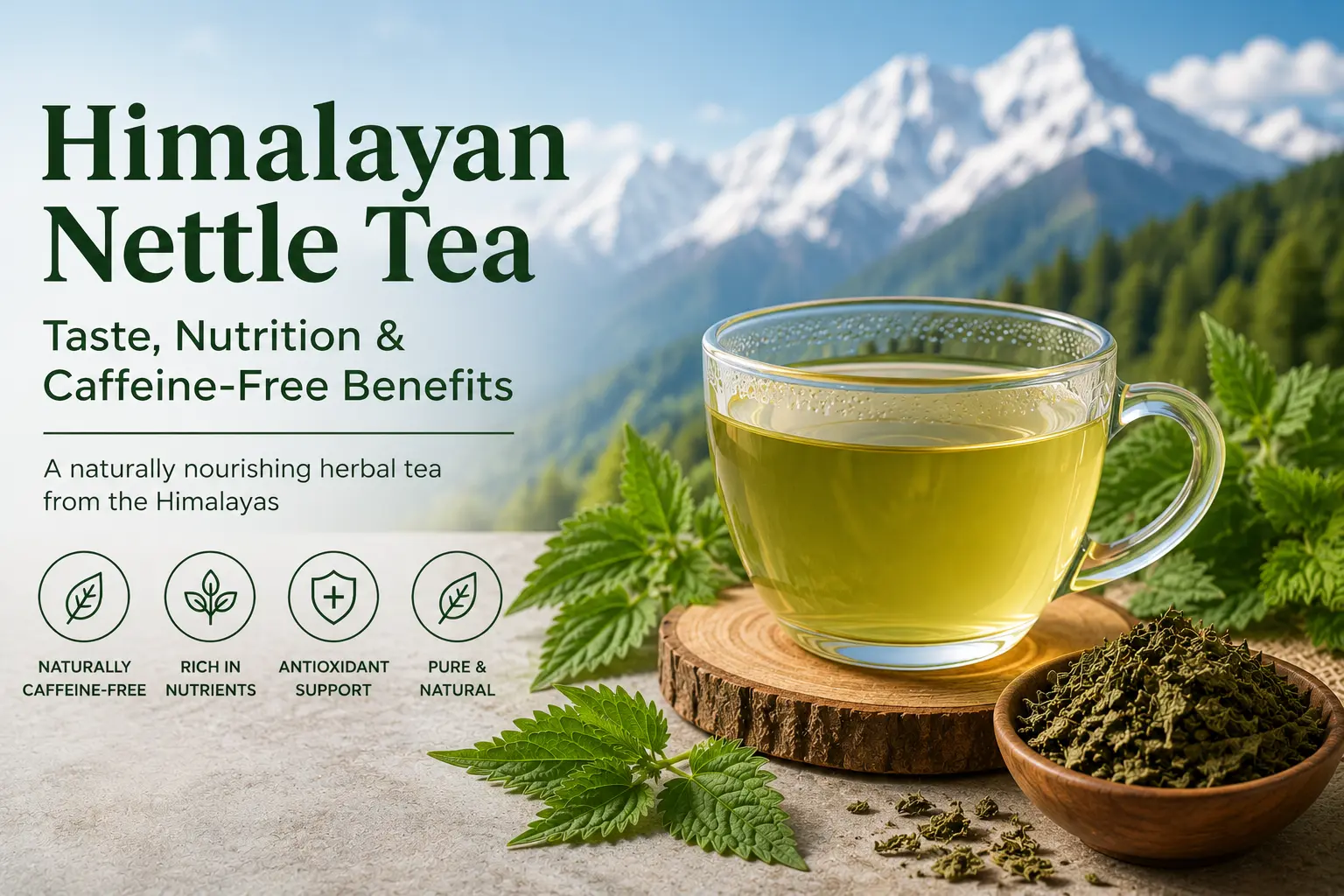
Himalayan nettle tea is becoming an interesting choice for people looking beyond conventional tea and looking for a naturally caffeine-free herbal drink. Made from Urtica himalayensis, a nettle native to the Himalayan region, it offers a distinctive herbal taste along with naturally occurring plant nutrients and compounds.
A Naturally Caffeine-Free Herbal Tea
One of the simplest characteristics of Himalayan nettle tea is that it is naturally caffeine-free.
Unlike traditional tea made from Camellia sinensis, nettle tea can be enjoyed without adding caffeine to your daily routine. It can be served in the morning, after lunch or in the evening, depending on your preference.
For people who enjoy having a warm beverage throughout the day but want to limit caffeine, this makes nettle tea an easy herbal option.
What Does Himalayan Nettle Tea Taste Like?
Taste is an important part of choosing any herbal tea.
Himalayan nettle tea has a smooth, rich and velvety character with a naturally subtle sweetness. Its gentle herbal notes give it a distinctive flavor without making the cup overly strong or bitter.
The result is a comforting herbal drink that can be enjoyed on its own or incorporated into a regular tea routine.
What Nutrients Are Naturally Found in Nettle Leaves?
Nettle leaves naturally contain a variety of nutrients and plant compounds.
These include:
- Iron
- Calcium
- Magnesium
- Vitamins A, C and K
- Polyphenols
- Flavonoids
- Chlorophyll
The exact nutritional contribution of a cup depends on factors such as the amount of nettle used and how the tea is prepared.
Nettle tea should not be considered a replacement for a balanced diet. Instead, it can be one simple way of adding another plant-based beverage to your routine.
Nettle Tea and Naturally Occurring Antioxidant Compounds
Nettle leaves contain naturally occurring polyphenols and flavonoids, plant compounds known for their antioxidant properties.
Our everyday environment exposes the body to various sources of oxidative stress. A balanced diet containing a variety of fruits, vegetables and other plant foods is one way of supporting overall nutritional wellbeing.
A cup of nettle tea can complement this approach as part of a varied, balanced lifestyle.
Why Choose a Himalayan Nettle Tea?
Himalayan nettle tea offers a combination that makes it different from many everyday beverages:
- Naturally caffeine-free
- Made from whole nettle leaves
- Contains naturally occurring plant nutrients
- Provides polyphenols and flavonoids
- Has a smooth and gently sweet herbal character
- Can be enjoyed at different times of the day
For someone looking for a simple herbal beverage rather than another caffeinated tea or sugary drink, these characteristics can make nettle tea an interesting addition to the pantry.
How to Make Himalayan Nettle Tea Part of Your Routine
There doesn’t need to be a complicated wellness routine around a cup of herbal tea.
You can simply enjoy Himalayan nettle tea as a warm beverage when you would normally reach for tea or another drink.
Try having it:
In the morning — as a caffeine-free alternative to your usual tea.
After lunch — as a warm herbal beverage.
In the evening — when you want a soothing, caffeine-free drink.
The key is to treat nettle tea as part of an overall balanced lifestyle rather than as a substitute for nutritious food, adequate hydration or professional healthcare.
Himalayan Nettle Tea: A Simple Herbal Choice
Himalayan nettle tea stands out not because it needs to replace every other beverage, but because it offers something different.
It is naturally caffeine-free, has a smooth and subtly sweet herbal taste, and contains naturally occurring nutrients and plant compounds such as iron, calcium, magnesium, polyphenols and flavonoids.
For anyone curious about exploring Himalayan herbs and adding more plant-based choices to their daily routine, Himalayan nettle tea can be a simple place to start.
Frequently Asked Questions
Is Himalayan nettle tea naturally caffeine-free?
Yes. Himalayan nettle tea is naturally caffeine-free.
What does Himalayan nettle tea taste like?
It has a smooth, rich and velvety herbal character with a subtle natural sweetness.
What nutrients are found in Himalayan nettle leaves?
Nettle leaves naturally contain nutrients and plant compounds including iron, calcium, magnesium, vitamins A, C and K, polyphenols, flavonoids and chlorophyll.
Can I drink Himalayan nettle tea in the evening?
Because it is naturally caffeine-free, it can be enjoyed in the evening as well as at other times of the day.
Is nettle tea a replacement for a balanced diet?
No. Nettle tea is best viewed as an additional plant-based beverage that can complement a varied and balanced diet.