Himalayan Nettle Tea vs Green Tea: Which Is Better for Your Daily Routine?
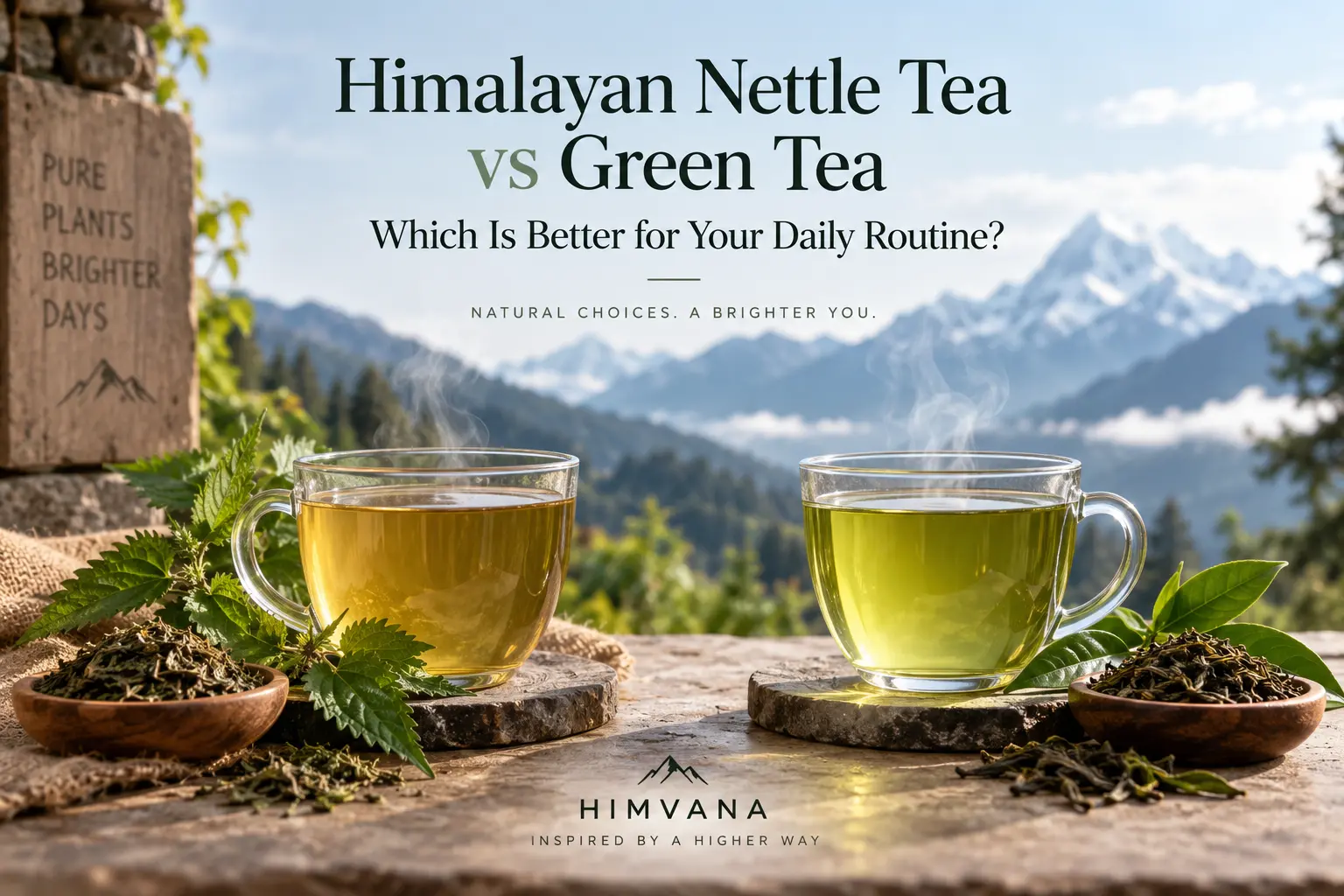
Green tea has long been a popular choice for people looking for an alternative to traditional tea and coffee. But if you are interested in caffeine-free herbal beverages, Himalayan nettle tea offers a completely different option.
Made from Urtica himalayensis, Himalayan nettle tea is a herbal infusion associated with the Himalayan region. Green tea, on the other hand, is made from the leaves of Camellia sinensis and naturally contains caffeine.
So, which one is better for your daily routine?
There is no universal answer. The right choice depends on your caffeine preference, taste, daily schedule, and the type of beverage you enjoy.
Let’s look at the differences between Himalayan nettle tea and green tea and see where each one fits into a daily routine.
What Is Himalayan Nettle Tea?
Himalayan nettle tea is a herbal infusion prepared from the dried leaves of Urtica himalayensis, a nettle species found in the Himalayan region.
Unlike green tea, nettle tea does not come from the traditional tea plant. It is therefore considered an herbal infusion rather than a true tea.
Nettle has a long history of use as a food and traditional plant in Himalayan communities. Today, dried nettle leaves can be prepared as a simple herbal beverage.
Himalayan nettle tea has a naturally earthy and herbal flavor and, when made from pure nettle leaves, is naturally caffeine-free.
This makes it an interesting option for people who want to add more variety to their daily beverage routine.
What Is Green Tea?
Green tea is made from the leaves of Camellia sinensis, the same plant used to produce black tea, white tea, and other traditional teas.
The leaves undergo processing that limits oxidation, helping create the fresh, grassy flavor and green color associated with green tea.
One of the most important differences between green tea and Himalayan nettle tea is caffeine.
Green tea naturally contains caffeine. The actual amount can vary depending on the variety, serving size, brewing time, and preparation method.
Green tea also contains naturally occurring compounds such as catechins and other polyphenols that have been widely studied.
Himalayan Nettle Tea vs Green Tea: The Key Differences
1. Caffeine Content
Caffeine is probably the biggest difference to consider when choosing between the two.
Himalayan nettle tea:
- Pure nettle tea is naturally caffeine-free.
- It can be used when you want a warm beverage without caffeine.
- It can fit into morning, afternoon, or evening routines.
- It may be particularly appealing to people who are trying to reduce their overall caffeine intake.
Green tea:
- Naturally contains caffeine.
- Can be a suitable choice earlier in the day for people who enjoy caffeinated beverages.
- Caffeine sensitivity varies from person to person.
- Some people may prefer to avoid caffeinated drinks later in the day.
If avoiding caffeine is your priority, Himalayan nettle tea has a clear advantage.
If you enjoy caffeine as part of your morning routine, green tea may be the better fit.
2. Taste and Flavor
Taste is another major difference.
Himalayan nettle tea generally has a mild, earthy and herbal flavor. The taste can vary depending on the leaves, processing, quantity used, and brewing time.
Green tea tends to have a more recognizable tea flavor. Depending on the variety, it can taste grassy, fresh, vegetal, slightly sweet, or mildly bitter.
Brewing also affects the final taste.
Green tea can become noticeably bitter if it is brewed with excessively hot water or left to steep for too long. Nettle tea generally produces a softer herbal infusion.
If you prefer traditional tea flavors, green tea may be more familiar.
If you enjoy earthy herbal beverages, Himalayan nettle tea is worth exploring.
3. Morning Routine
Green tea can work particularly well in a morning routine because it contains caffeine.
For someone replacing their morning coffee or looking for a lighter caffeinated beverage, green tea can be an appealing choice.
Himalayan nettle tea can also be enjoyed in the morning, especially if your goal is to start the day with a caffeine-free herbal drink.
There is no requirement that your morning beverage contain caffeine. Your choice ultimately comes down to what you enjoy and how your body responds to caffeine.
4. Afternoon and Evening Use
This is where Himalayan nettle tea can be particularly convenient.
Because pure nettle tea is naturally caffeine-free, it can be enjoyed later in the day without adding caffeine to your routine.
Green tea contains caffeine, so some people prefer to drink it earlier in the day.
However, caffeine affects everyone differently. If you are sensitive to caffeine, keeping green tea to the morning or early afternoon may be more comfortable.
For a relaxing evening beverage, a caffeine-free herbal infusion such as Himalayan nettle tea can be a simple option.
5. Plant Compounds
Himalayan nettle and green tea come from completely different plants, so their naturally occurring compounds are also different.
Green tea contains catechins and other polyphenols, including the well-known compound EGCG. These compounds are among the reasons green tea has received considerable scientific interest.
Nettle leaves also contain naturally occurring plant compounds and nutrients. Their composition can vary depending on the plant, growing conditions, harvest stage, and processing.
It is therefore better to think of these beverages as different rather than trying to determine which one has the “better” nutritional profile.
Green tea brings the characteristics of Camellia sinensis, while Himalayan nettle tea provides a caffeine-free herbal infusion made from Urtica himalayensis.
6. Daily Hydration
Both beverages can contribute to your daily fluid intake when prepared as drinks.
The most important factor is choosing beverages you enjoy and can comfortably include in your routine.
If you already enjoy green tea, there is no need to replace it simply because nettle tea is available.
Likewise, if you prefer caffeine-free drinks, Himalayan nettle tea can provide variety without adding caffeine.
You can also alternate between the two.
For example:
- Morning: Green tea if you enjoy a caffeinated beverage.
- Afternoon: Himalayan nettle tea as a caffeine-free alternative.
- Evening: Himalayan nettle tea when you want a warm herbal drink.
This approach allows you to enjoy the characteristics of both beverages.
Which One Is Better for a Caffeine-Free Routine?
If your main goal is to reduce or avoid caffeine, Himalayan nettle tea is the more natural choice.
Pure Himalayan nettle tea does not naturally contain caffeine, while green tea does.
This can make nettle tea useful for people who want to explore herbal beverages throughout the day without relying on caffeinated drinks.
However, caffeine isn’t necessarily something everyone needs to avoid.
If you enjoy green tea and tolerate caffeine well, it can remain a perfectly reasonable part of your beverage routine.
Which One Has a More Traditional Tea Experience?
If you are looking for the traditional tea experience, green tea is the obvious choice.
Green tea comes from Camellia sinensis and has been consumed in different cultures for centuries. Its flavor, aroma, brewing methods, and varieties are all part of a well-established tea tradition.
Himalayan nettle tea offers something different.
It is an herbal infusion rather than traditional tea and brings an earthy, botanical character to your cup.
So the choice comes down to whether you want a classic tea experience or something different from the usual tea varieties.
Which One Is Easier to Include in an Evening Routine?
For a caffeine-free evening beverage, Himalayan nettle tea may be more convenient.
You can prepare it as a simple herbal infusion and enjoy it warm after dinner or during a quiet evening.
Green tea can also be consumed in the evening, but its caffeine content is an important consideration for people who are sensitive to caffeine.
If you already know that caffeine late in the day affects your sleep or makes you feel restless, a caffeine-free herbal option may be preferable.
How to Prepare Himalayan Nettle Tea
Preparing Himalayan nettle tea is simple.
Basic brewing method:
- Add around 1 teaspoon of dried Himalayan nettle leaves to a cup.
- Pour hot water over the leaves.
- Allow the leaves to steep for approximately 5–7 minutes.
- Strain the tea.
- Enjoy it warm, or allow it to cool for a refreshing cold infusion.
You can adjust the amount of leaves and steeping time according to your preferred strength.
How to Prepare Green Tea
Green tea is generally prepared by steeping tea leaves or a tea bag in hot water.
The recommended temperature and steeping time depend on the specific green tea variety.
As a general rule, avoiding excessively hot water and very long steeping times can help prevent an overly bitter cup.
The ideal preparation method is ultimately the one that produces a flavor you enjoy.
Can You Drink Both Himalayan Nettle Tea and Green Tea?
Yes.
You don’t necessarily have to choose one and completely avoid the other.
They can serve different purposes within the same daily routine.
For example, you could enjoy green tea during the morning when you want a caffeinated beverage and switch to Himalayan nettle tea later in the day.
This gives you more variety while allowing you to control when you consume caffeine.
A flexible tea routine can be more enjoyable than relying on the same beverage every day.
Who May Prefer Himalayan Nettle Tea?
Himalayan nettle tea may be a good option for people who:
- Prefer caffeine-free beverages.
- Enjoy herbal rather than traditional tea flavors.
- Want an alternative to tea or coffee later in the day.
- Like earthy and botanical flavors.
- Are interested in Himalayan plants and traditional herbal beverages.
- Want to add variety to their daily beverage routine.
Who May Prefer Green Tea?
Green tea may be a better fit for people who:
- Enjoy caffeinated beverages.
- Prefer the flavor of traditional tea.
- Like fresh, grassy, or vegetal flavors.
- Want a caffeinated beverage in the morning.
- Already enjoy green tea as part of their daily routine.
Why Try Himalayan Nettle Tea?
One of the biggest attractions of Himalayan nettle tea is that it offers something different from conventional tea.
Himvana’s Wild Himalayan Nettle Tea is made from Urtica himalayensis, a Himalayan nettle species. The tea is naturally caffeine-free and offers an earthy herbal flavor.
For someone who already drinks green tea, nettle tea can provide variety.
For someone trying to reduce caffeine, it can be another beverage to consider.
And for anyone interested in Himalayan botanicals, it provides an opportunity to explore a traditional plant in a simple, modern form.
The goal doesn’t have to be replacing green tea completely. It can simply be about discovering another type of herbal infusion.
Frequently Asked Questions
Is Himalayan nettle tea better than green tea?
Neither is universally better. Himalayan nettle tea is a caffeine-free herbal infusion, while green tea is a caffeinated true tea. The better choice depends on your personal preferences and daily routine.
Does Himalayan nettle tea contain caffeine?
Pure Himalayan nettle tea made from Urtica himalayensis is naturally caffeine-free.
Does green tea contain caffeine?
Yes. Green tea naturally contains caffeine, although the amount varies depending on the variety, serving size, and brewing method.
Can I drink Himalayan nettle tea at night?
Because pure Himalayan nettle tea is naturally caffeine-free, it can fit into an evening beverage routine.
Does Himalayan nettle tea taste like green tea?
No. Himalayan nettle tea generally has a mild, earthy and herbal flavor, while green tea tends to have a fresher, grassy or vegetal flavor.
Can I drink Himalayan nettle tea and green tea on the same day?
Yes. You can enjoy both as part of the same daily beverage routine. For example, green tea can be consumed earlier in the day and caffeine-free nettle tea later.
Is Himalayan nettle tea a true tea?
No. Himalayan nettle tea is technically an herbal infusion because it is made from Urtica himalayensis rather than the Camellia sinensis tea plant.
Can Himalayan nettle tea replace green tea?
It can replace green tea when your goal is simply to enjoy a caffeine-free herbal beverage, but the two drinks have different flavors, caffeine content, and plant compositions.
Final Thoughts
Himalayan nettle tea and green tea offer two very different tea-drinking experiences.
Green tea is a traditional caffeinated tea made from Camellia sinensis, with a fresh flavor and naturally occurring compounds such as catechins.
Himalayan nettle tea is a caffeine-free herbal infusion made from Urtica himalayensis, with a mild, earthy and botanical character.
If you enjoy caffeine and traditional tea, green tea can be an excellent part of your morning routine.
If you prefer caffeine-free beverages or want something to enjoy later in the day, Himalayan nettle tea is an interesting alternative.
And you don’t have to choose just one.
Enjoying green tea in the morning and Himalayan nettle tea later in the day can give you the best of both worlds while adding variety to your daily routine.
Ultimately, the best beverage is the one that fits your preferences, your schedule, and the way you like to enjoy your day.